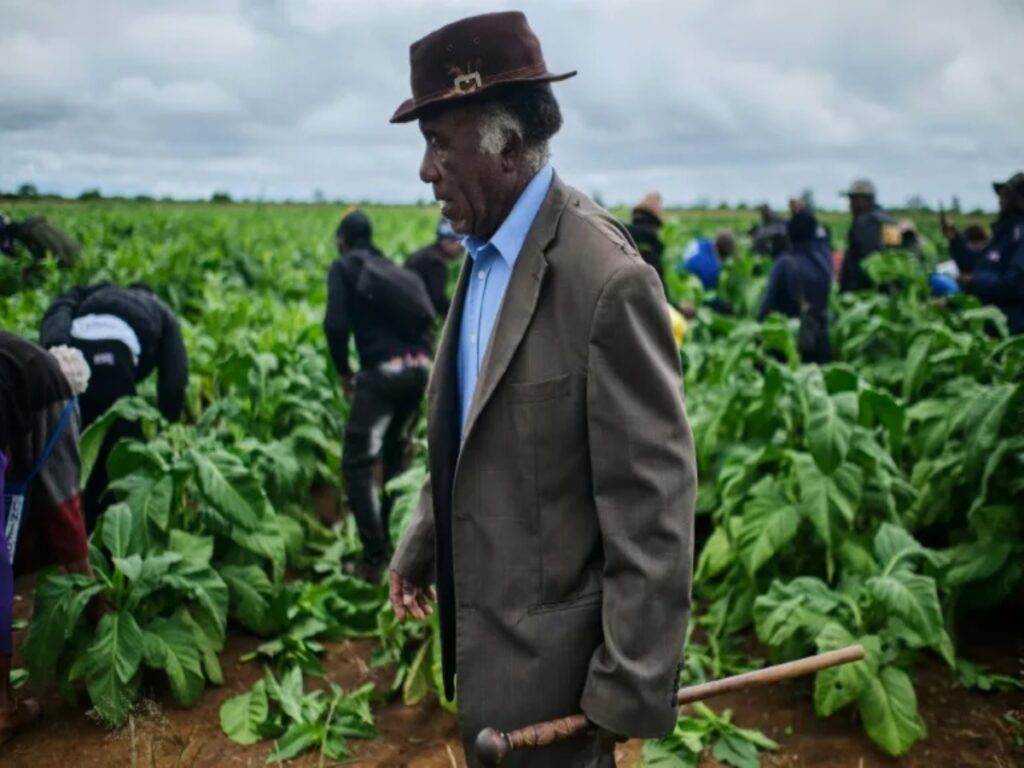
In a vast field, rows of vibrant green tobacco plants reached toward the bush, marking a remarkable recovery of the crop in Zimbabwe, primarily driven by smallholders working under contracts with Chinese companies.
Zimbabwe’s tobacco production is rising to all-time highs as farmers seek more resilient, lucrative crops. However, contract farming, frequently for Chinese companies, dominates the industry, leaving farmers struggling.
Read Sola, 64, is one of the more than 300 farmers who are currently cultivating tobacco in the historically non-tobacco-producing southern Matabeleland region.
“Maize was not profitable as it was prone to disease,” Sola told AFP, expressing his hope for a “rewarding harvest” in his new endeavour.
On a training field day, several dozen aspiring tobacco farmers examined the broad leaves, eager to learn how to cultivate a plant for which Zimbabwe holds the title of Africa’s top producer.
According to the tobacco board, approximately 95% of Zimbabwe’s over 127,000 registered tobacco farmers are contracted smallholders, who account for 85% of total output.
Atlas Agri, based in the UAE, is one of the country’s 44 registered merchants and contractors.
In the contract model, buyers commit to getting the harvest at a predetermined price and advance seeds, fertiliser, and other inputs on credit.
Davis Tembo, a 50-year-old farmer, told AFP that his contract with a Chinese company brought him mixed results, that is, money to purchase a larger plot but a grinding reliance on his contractor.
After growing tobacco on his own for four years, he signed on in 2015 because he didn’t have the money to start a new crop.
His contractor ensures the timely arrival of inputs, but unpredictable weather means he cannot always deliver the expected yield, leaving him in the red.
Tembo told AFP, “Farmers are compelled to return to the field and stick with contract farming, hoping that they will at some point break even.”
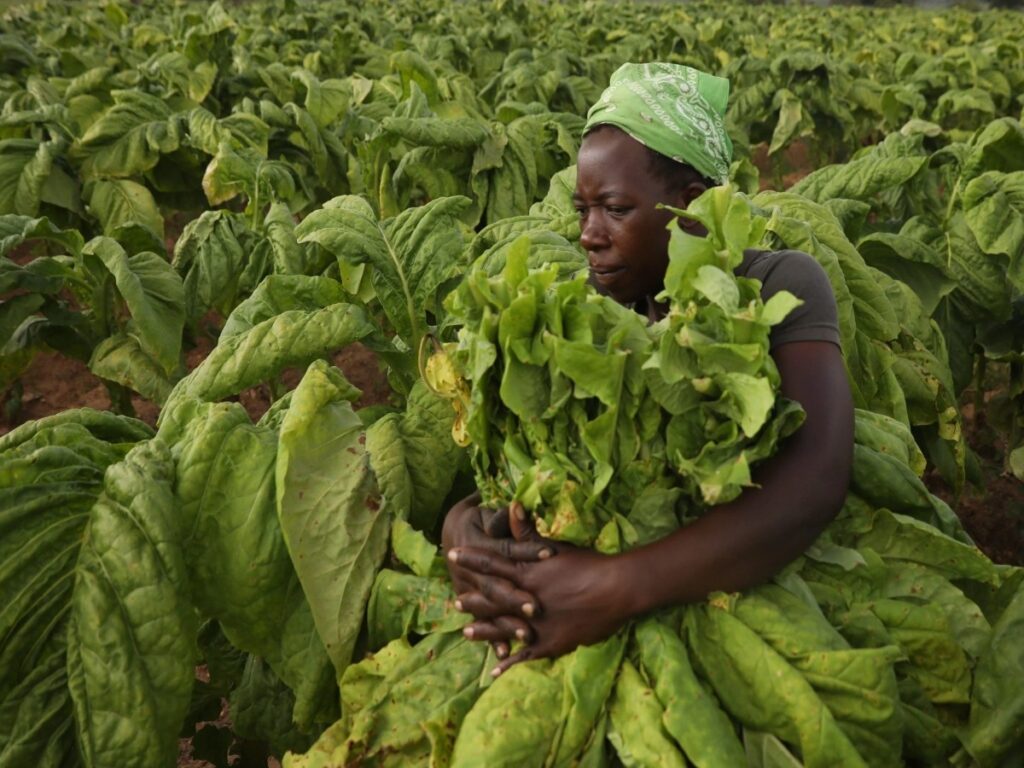
According to industry insiders, because most smallholders do not own their land, they are unable to obtain bank financing, which also has interest rates that are more than double the 15% offered to contractors.
According to George Seremwe, president of the Zimbabwe Tobacco Growers Association, profitability is challenging despite the appeal.
He told AFP that “you have insurance charges, floor charges, and various other levies that make production unsustainable”, reiterating claims that contractors work together to maintain low prices and “shortchange” producers.
He added that “Farmers are rendered mere labourers of the contracting companies and a number of them become trapped in debt.”
Chinese companies control the majority of tobacco production, much like in Zimbabwe’s profitable mining industry. This near-monopoly has been criticised for contributing to price stagnation.
Emmanuel Matsvaire, the CEO of the Tobacco Board, told AFP that Chinese companies account for 60 percent of the country’s output by value, or 30–40% of its volume.
He acknowledged the need to “reduce the risk of overexposure to the Chinese market” and stated that they will buy roughly 10,000 fewer tonnes this season.
According to Matsvaire, Zimbabwe exports to about 60 other markets, confirming plans for US tobacco giant Philip Morris International to reopen operations in the nation after several decades.
While concerns over debt and deforestation persist, most are contracted to Chinese firms in a model that has taken Zimbabwe’s tobacco crop to new heights.
According to the board, production increased from 306,000 tonnes in 2024 to 355,000 tonnes in 2025.
An official told AFP that a 15 percent increase in planted area will result in a harvest of over 360,000 tonnes this year.
That is a dramatic turnaround for a sector that fell to 48,000 tonnes in 2008 after a botched government land reform programme which saw hundreds of commercial farms seized.
Zimbabwe’s Finance Minister, Mthuli Ncube, stated at the start of the new marketing season in March that the nation intends to boost output in the upcoming years and triple domestic value addition of tobacco, such as cigarette production, which currently stands at 11%.
Meanwhile, the World Health Organisation (WHO) and other critics claim that tobacco companies are expanding into Africa, displacing arable land from food production and causing deforestation.
According to the WHO, which advocates for tobacco-free farms, the area under tobacco decreased by 15.8 percent worldwide between 2005 and 2020, but it increased by 19.8 percent in Africa.
According to its 2020 statistics, Zimbabwe was Africa’s leading producer of tobacco leaves, accounting for one-third of the continent’s total.