
Edmond Kombat, Managing Director of the Tema Oil Refinery (TOR), has called for increased collaboration among African leaders to harness the continent’s petroleum potential. Speaking amid a sharp rise in global oil prices, Kombat emphasized that collective action is essential to securing Africa’s energy future and economic wealth.
Addressing the Africa Media Extractives Fellowship, Kombat criticized the continent’s vulnerability to external shocks, noting that global disputes continue to disproportionately impact Africa’s oil performance.
According to him, this reliance emphasizes how urgently regional energy independence is needed.
He said, “As a West African subregion, we have to have our own pricing benchmark. We currently price crude and petroleum products. Crude, especially on Brent, which is Europe-led. And then WTI (West Texas Intermediate) is American-led.”
Kombat added, “Ghana is producing crude. Ivory Coast is producing crude. Nigeria is producing crude. Angola is producing crude. Gabon, Equitorial Guinea are producing crude. Why can’t we have a sub-Saharan African benchmark?”
The TOR MD emphasized that this would act as a safety net in the event that there were global tensions similar to those occurring in Iran.
He explained, “You know, if you have a reference benchmark, we will not say crude has gone to $100, because what has the world war in Iran got to do with it? If you have your own price, West African or sub-Saharan African pricing benchmark, we could have still stayed around $65 as a premium. Because the benchmark’s response is based on events that are happening at certain places.
“So that even if you are saying that it will redirect traffic back to Africa for African crude, that level of risk will not make it spike from $65, $70 all the way to $100. So that’s one thing that we have to do. Because we are paying premiums that we shouldn’t be paying … We have to begin to think about what we can do about it as Africans,” he continued.
Kombat also proposed re-routing crude business to domestic African refineries in order to keep premium prices low for other African countries.
He said, “Make sure that national oil companies that represent governments’ shares in offshore drilling of petroleum product, or crude, re-channel those things to domestic refineries to Africa. Because if you buy crude from Dubai, or if you buy crude from far away, they charge you the freight, and the freight covers the distance. They charge you the insurance… If I take the crude from Nigeria, or I take it from the Jubilee Fields, or I take it from Ivory Coast, I should not be paying those kinds of premiums. Those premiums impact the cost of refining the petroleum product. So we have to rethink and reorganize ourselves to make sure that we have value addition.”
In terms of petroleum production and refining, Kombat stated that he thinks Africa produces “enough” to support itself. He compared Singapore, which doesn’t produce enough, to Nigeria and Angola, two of the top ten petroleum producers in this region.
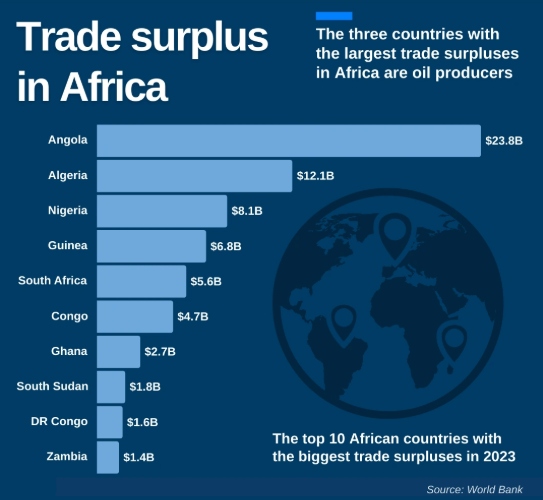
Additionally, he noted that South Korea has the highest combined daily output of refined petroleum products, despite not producing up to 100,000 barrels.
“So it’s about the mindset,” Kombat said.
He emphasized, “We have almost the whole coastal belt. Almost every country has crude one way or the other. So it’s important for us to be able to do something like that. Uganda has discovered hydrocarbons. Namibia has discovered hydrocarbons.”
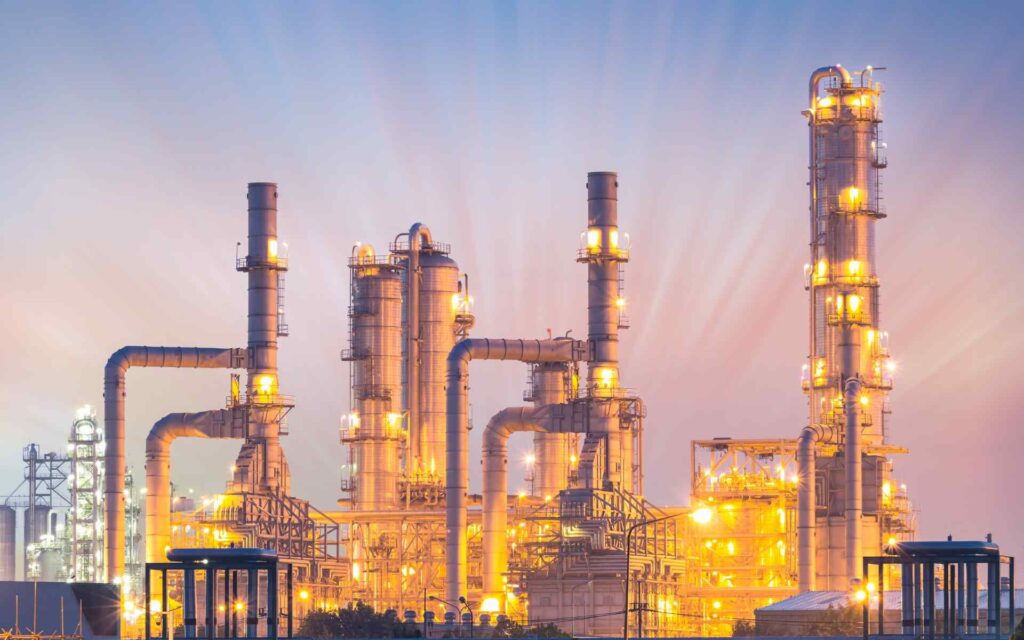
Africa continues to play a significant role in the world’s oil markets, exporting millions of barrels of crude to Europe, Asia, and the Americas while still being largely dependent on imported refined goods, according to the African Energy Chamber.
Some of the biggest producers of crude on the continent, such as Nigeria, Angola, Libya, Algeria, and Egypt, are located in West and North Africa. However, the report pointed out that many nations are forced to import high-value petroleum products while exporting low-value crude due to limited refining capacity.
NJ Ayuk, Executive Chairman of the African Energy Chamber (AEC), said during the State of African Energy 2026 Outlook, “Africa produces the oil the world needs, but too much of the value still leaves the continent. Investing in refining capacity, modern infrastructure, and regional cooperation allows Africa to transform its oil trade, strengthen energy security, and ensure hydrocarbons drive industrialization and economic growth for decades to come.”