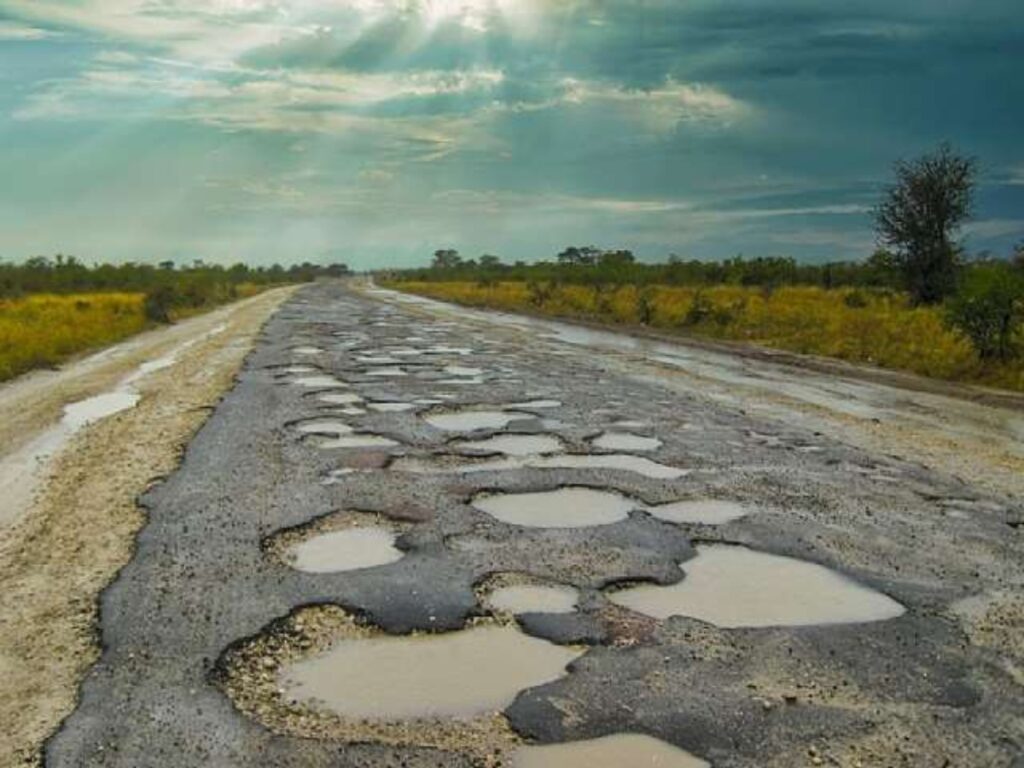
Go to any market in Accra on a weekday morning. Watch a woman arrange her tomatoes into neat little piles, pricing each one carefully. Ask her why tomatoes cost so much, and she will probably wave her hand in a general direction towards the farms, towards a road you have never driven on and probably never will.
That road is the real reason your food is expensive.
Not the market woman. Not the trader. Not even the fuel price, though that plays its part. The deepest root of Ghana’s food price problem is a crumbling network of feeder roads connecting our farms to the rest of the country, roads so bad that getting a bag of maize from a field in the Northern Region to a kitchen in Accra costs more than it should, takes longer than it should, and destroys more food along the way than anyone is comfortable admitting.
Kambon Naa is the chief of Kambon-Naakura, a small farming community in the Mion District of Northern Ghana. He is also a farmer who grows cassava, yam, maize, soybeans, and sorghum. Has done so for decades. And for decades, he has watched his hard work get swallowed by one simple problem: a single dilapidated road that is the only way in and out of his community.
“I once lost all my produce in a bushfire,” he told the Ghana News Agency. “We delayed getting a truck to Tamale because of the road. By the time it arrived, the fire had destroyed everything.”
Think about that for a moment. A man loses an entire harvest not because of drought, not because of disease, but because no truck would risk the road.
“Aggregators want to buy from us, but the bad roads discourage them. When they do come, they offer very low prices, which only deepens our poverty.”
So the farmers grow the food. The buyers know the food exists. But the road in between is so terrible that the farmer ends up poor and the buyer ends up with leverage. And eventually, the consumer in the city ends up paying for all of it.
Here is how the math works, and it is not complicated.
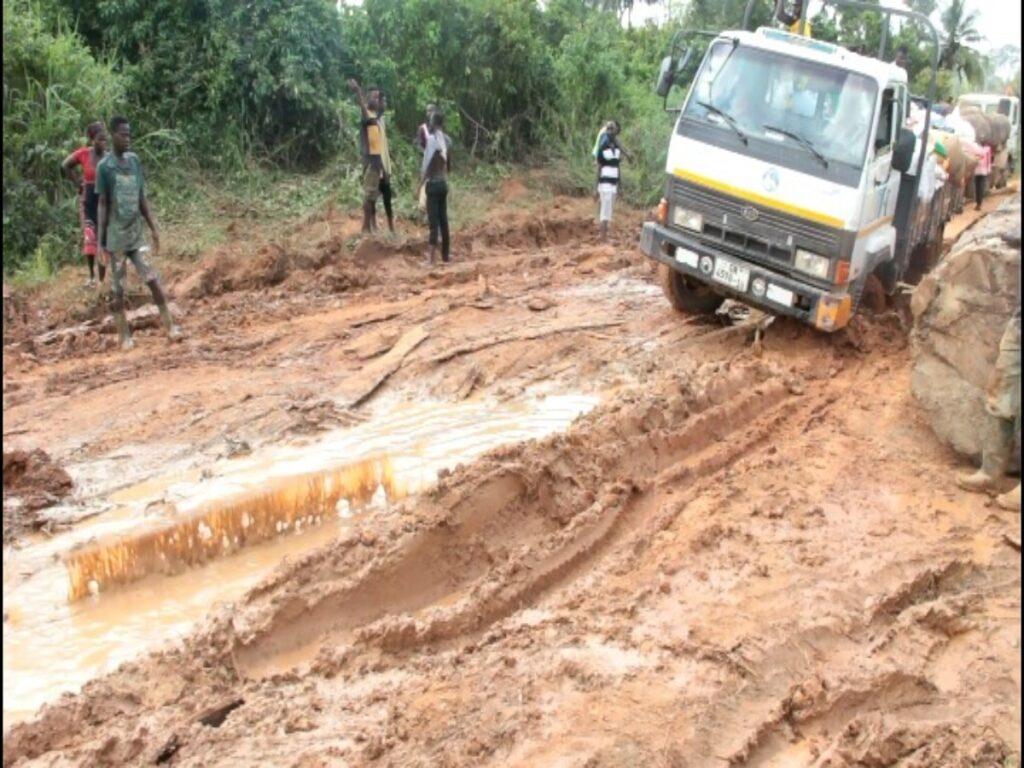
When a truck driver refuses to travel a bad road because he does not want to destroy his vehicle, or because it will take four hours instead of one, the farmer turns to an aboboyaa, the three-wheeled motorised tricycle you see everywhere in Ghana. The aboboyaa driver charges more because the terrain is rough. So by the time the produce even reaches the roadside, the cost has already climbed.
Then a truck eventually comes. That driver has seen bad roads before. He knows what it does to his tyres, and his engine. He prices that risk into what he charges. The trader who buys the produce in the city then prices in her own costs, her own risk, her market stall fees. And by the time a tomato gets from Navrongo to Kaneshie, everyone along that chain has quietly added their surcharge for the road that nobody fixed.
Dr. Felix Mawuli Kamassah, who leads the Vegetable Producers and Exporters Association of Ghana, described deteriorated road networks as “one of the biggest and least-discussed drivers of food inflation,” as reported by The Business & Financial Times. He pointed out that prices in Accra, Kumasi and other cities climb precisely because of these accumulated costs stacking up along the supply chain.
And then there is the food that simply does not make it to the market. Tomatoes that rot in a vehicle stuck on a bad stretch. Peppers that spoil while waiting for a truck willing to attempt the journey. A farmer who loses half his harvest does not eat that loss. That farmer adjusts his price on what remains. You pay for what he lost.
When President Mahama’s government came to power in January 2025, food inflation in Ghana was at 28.3 percent. That is not an abstract statistic. That means a family that spent GH₵1,000 on food in January 2024 was spending GH₵1,283 for the exact same things a year later. And this is in a country where urban households already spend between 50 and 60 percent of their income just on food.
Meanwhile, Ghana imports close to $2 billion worth of basic food every year, including rice, poultry, vegetable oils, and sugar, things we are perfectly capable of producing ourselves, if only we could get what we grow from the farm to the factory to the table without it costing a fortune or ending up on the side of a broken road.
President Mahama called that import bill “an urgent need for a bold and collective response” at the Feed Ghana Programme launch in Techiman. He reinforced that message at the Ghana Horticulture Expo 2025, where he challenged farmers and investors to move “from conferences to cold chains.” He is right. But bold responses need to go beyond the market. They need to start with the roads.
To be fair, the current administration has not ignored this. As reported by Modern Ghana, the 2026 national budget set aside GH₵828 million to construct 1,000 kilometres of agricultural enclave roads, roads specifically designed to link farms to markets. Finance Minister Dr. Ato Forson said plainly that poor road infrastructure linking farms to market centres is a major factor behind persistent food inflation.
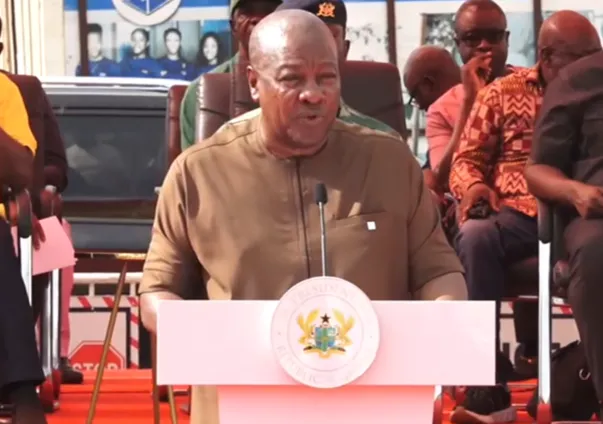
President Mahama’s Feed Ghana Programme, launched in Techiman in April 2025, includes plans for agro-production zones equipped with irrigation, roads, power and warehousing to attract private investment. And as announced by the Office of the Presidency, 120 kilometres of feeder roads linking cocoa-farming communities to key buying centres are in the pipeline, alongside the long-awaited Juaboso–Asawinso trunk road which is part of the government’s broader ‘Big Push’ infrastructure commitment.
The numbers are already moving in the right direction. According to Graphic Online, food inflation had come down from 28.3 percent to 9.5 percent by October 2025, signaling a real improvement driven by fertiliser distribution, irrigation expansion and better supply chain management. That is progress worth acknowledging.
But the feeder road problem is structural. It has been building for decades. You cannot fix it with one budget cycle. Dr. Kamassah was cautiously optimistic but clear-eyed, as quoted by The Business & Financial Times: “Impact will depend on delivery.”
Ghana can do better. With the right investment in mechanised farming and irrigation, this country has the capacity to produce far more than it currently does. The potential is not in question.
But here is the problem, we cannot even move what we already grow. And that inability is showing up directly on the price tags in our markets. Food inflation that hit 28.3 percent at the start of 2025 was not just a result of low production. It was the result of food that could not get from the farm to the city without doubling in cost along the way.
As Dr. Kamassah put it, “inflation often begins where good roads end.”
This piece was written with the help of an Artificial Intelligence tool